

How To Paper Tune A Bow
How to Newspaper Tune a Bow
Newspaper makes perfect when information technology comes to bowhunting.
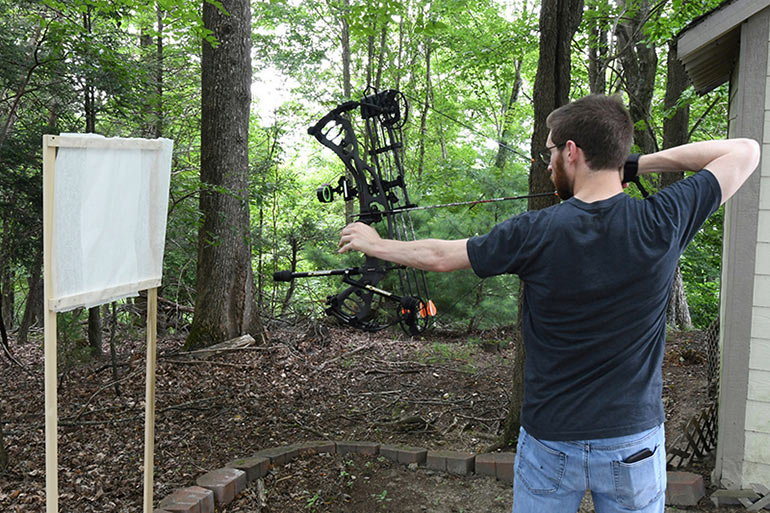
The beginning and most obvious question when it comes to newspaper-tuning your bow is why yous demand to do it at all. In a nutshell, paper-tuning gives you lot clues about how your pointer behaves in flight and allows you to make adjustments for optimal arrow flight. Simply short of ownership a high-dollar, slow-motion camera, paper-tuning is 1 of the best ways serious bowhunters can rail arrow flying and make the right adjustments to their setups.
The bang-up news is that tuning your bow doesn't take to be a complicated process — all information technology actually takes is a niggling know-how and a fair mensurate of patience. Follow these quick and easy steps, and you'll be well on your way to producing more than accurate shots and tighter groups. In the end, that gives you the confidence yous need when the trophy of a lifetime is on the line, and that's what it's all nearly.
Build Your Frame
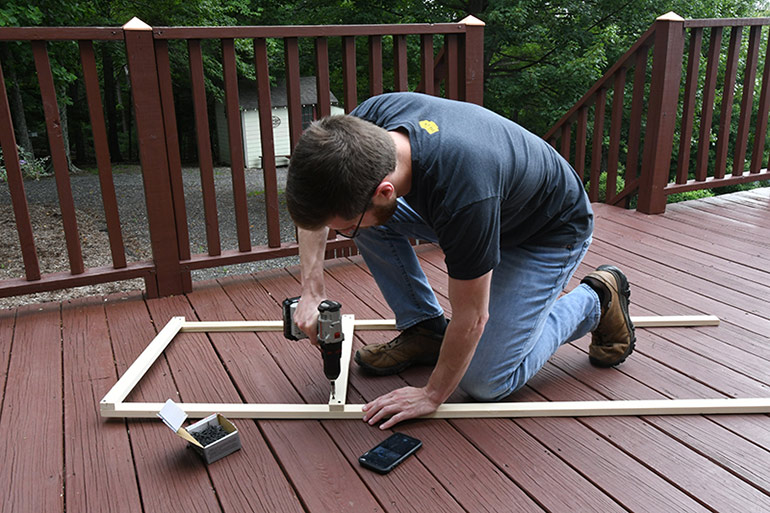
To begin the paper-tuning process, you lot first need a frame to concur the paper yous'll exist shooting through. Cheap furring strips from any hardware store are perfect for this project, though you lot can use any flake lumber you lot have laying effectually that tin can be nailed or screwed together to create a square frame. We used two viii-foot furring strips, a sawzall to cut to length, a mitt drill and 1-inch drywall screws to create this simple frame. Y'all can also sharpen the legs to brand it easier to pound the frame into the ground in front end of your target.
Stretch Your Paper
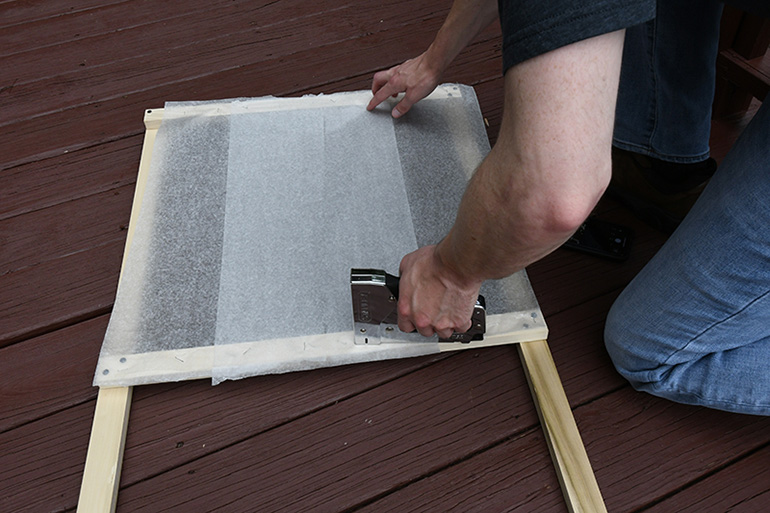
Later on creating a frame, use heavy butcher or wax paper and a staple gun, attaching one terminate of the newspaper to the peak of the frame evenly, pulling it tightly beyond the frame face and securing it at the bottom with more staples. You can as well use iv large, legal folder clips to secure the paper at the top and bottom.
Set Up Your Target
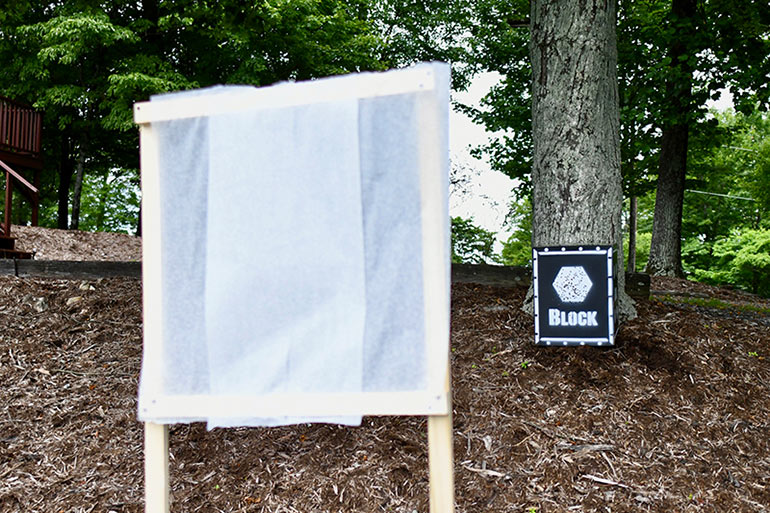
With your paper securely tightened across the frame, anchor your paper-tuning frame correct in front of a normal block target, which will catch arrows after they pass through the paper. Yous can either pound the sharpened frame into soft ground in front of the target, build boosted lumber feet so information technology tin can stand freely on physical or hard ground or prop the tuning target up with cinder blocks or bricks.
Fire Away
Now that you've got your paper-tuning frame placed in front of the target, stand up nigh 5 to x feet away from the paper, aligning yourself and the bow so that arrows pass through the paper and are safely captured past the block target. You want to stand up shut, because this tells yous how your arrow travels as it exits the arrow residue and clears the bow. The tears produced by the released pointer give you pointers on how to adapt your arrow rest and/or nocking point, or it gives y'all clues for improve arrow and/or bespeak selection.
View Your Shots

The tears in the tight paper produced by your flying pointer volition tell you how to go on with the tuning procedure. Every bit a side annotation, all of the instructions which follow are for right-handed shooters; you lot will have to opposite them for left-mitt shooters. Also, make sure your fletching clears the rest arms and accessories before starting this process.
Evaluate Paper Holes
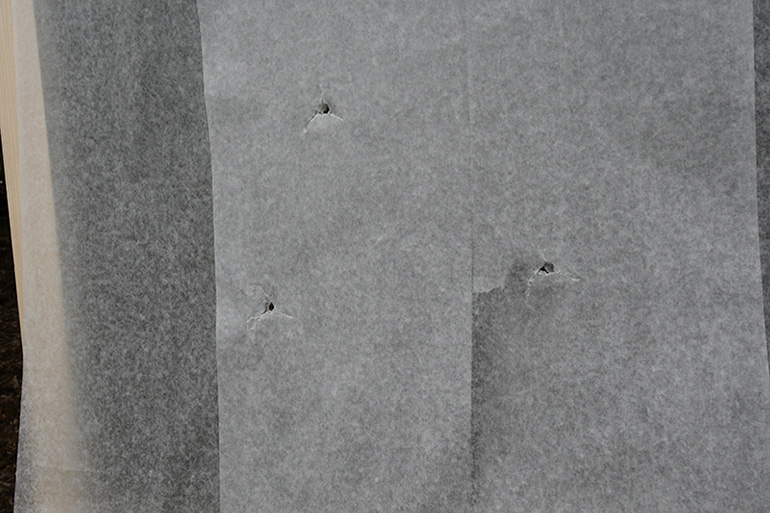
The point of this exercise — and the indication of a perfect tune — is to produce a clean bullet pigsty with three clean cuts showing where the vanes have passed through the paper. Keep in mind, there will be piddling or no cuts when shooting feather fletching.
Before you lot start, you should carefully consult an arrow manufacturer'due south nautical chart to assure you of the proper spine for all factors involved (draw length, arrow weight and bespeak weight).
A right-hand tear (lower-correct tear) indicates an arrow that is too stiff, owns besides niggling bespeak weight, an arrow balance that is adjusted as well close to the sight window of the riser or that y'all aren't shooting plenty draw weight. To solve the problem, choose an arrow with a lighter deflection/spine (400 instead of 340, for instance), cut that arrow longer, use a heavier indicate (125-grain instead of 100-grain, for example), adjust the arrow remainder away from the riser or add draw weight past tightening the limb bolts — evenly, and only when possible.
A left-hand tear (lower-left tear) indicates an arrow that's not potent plenty (or besides long) or has too much bespeak weight, or an arrow rest that's adjusted too far away from the riser sight window. This situation is solved by shortening the arrow (just not so much that a broadhead will contact the rest arms), choosing a lighter point (100-grain instead of 125-grain, for instance), moving the remainder artillery closer to the riser or decreasing draw weight by loosening the limb bolts evenly.
A high tear indicates that your nocking point or string loop is situated besides high and the arrow is leaving the bow tail-high. In this case, motility information technology downwards in small increments until the arrow passes through the paper level. A low tear indicates just the reverse.
Recommended
Sometimes you volition observe a combination tear, like i that is high and right. Work on the elevation adjustment first before moving on to the windage correction, as the former is easier to attain than the latter.
Make Adjustments
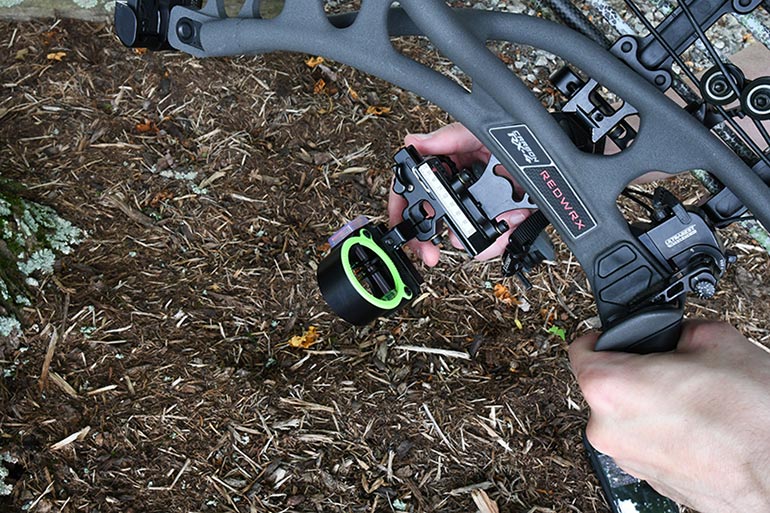
The larger the tear, the more than dramatic the adjustments to be fabricated. Information technology's normally best to start with the arrow remainder on smaller tears, making conscientious windage adjustments in 1/sixteen-inch increments (preferably using the pointer rest's engraved hash marks every bit reference and then y'all don't lose your identify) before investing in additional test shots. The adjacent area to accost is point weight, and arrow spine last (an arrow-pick chart should have landed you in the right ballpark in the beginning). This is trail-and-error work, and then have your time and be patient.
Finalize Your Group
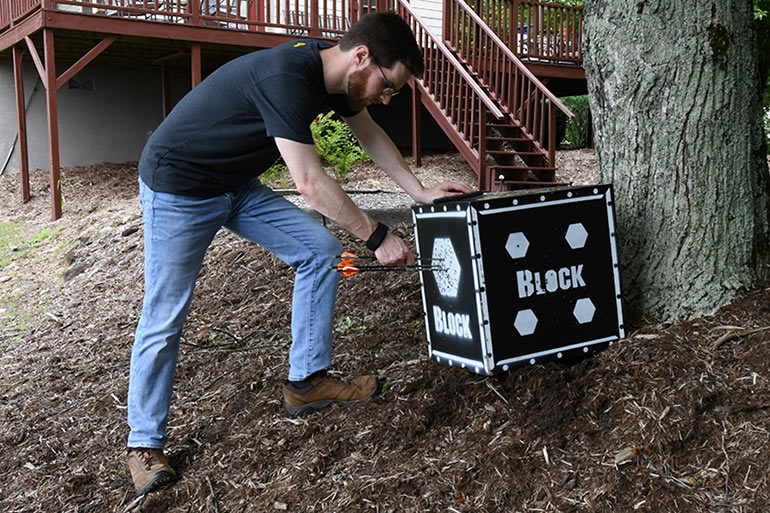
After your bow is properly paper-tuned, producing clean bullet holes through paper, you are then ready for concluding sighting. You should also find your bow at present shoots tighter groups with both target tips and hunting broadheads.
Gear up for the Real Deal
Now you're prepare to chase. Carefully tuning your hunting bow yourself provides confidence that your equipment is shooting the very best information technology can. And in bowhunting, conviction is worth its weight in gilt.
Source: https://www.bowhuntingmag.com/editorial/paper-tune-bow/309517
0 Response to "How To Paper Tune A Bow"
Post a Comment